Program 01 · Core programFlagship · In development
Wound-to-Scar™
Structured Surgical Wound Management & Scar Optimization
From the first assessment to the final scar.
Wound-to-Scar™ is the flagship educational program of Rafiee Academy, designed to teach physicians how to approach wounds and minor surgical injuries as a continuous clinical process, from initial assessment and tissue management to closure, protection, healing and follow-up.
- For
- Physicians and physicians in training
- Curriculum
- 6 modules · 27 topics
- Format
- To be announced
- Academic direction
- Dr. S. Nouri Rafiee
StatusIn development. The program is built on the Rafiee Educational Approach, whose framework has been developed; its pilot implementation and evaluation are in development. Format, dates and venue have not been announced.
What the program addresses
In the order a wound is met in practice, from the first look to the mature scar.
The scar begins with the way the wound is assessed, handled and closed.
- Wound assessment and classification
- Depth, anatomy and tissue involvement
- Wound cleaning and antisepsis
- Bleeding and minor trauma management
- Decision-making: when to close, delay closure or refer
- Tissue handling and atraumatic technique
- Suture, needle and closure selection
- Aesthetic closure of facial and body wounds
- Layered and intradermal closure
- Management of contaminated or infected wounds
- Prevention and optimization of scarring
- Wound protection and follow-up
- Management of poorly closed wounds and scar correction
- Clinical cases, simulation and practical assessment
Why the scar begins before the first stitch
A wound can be closed correctly and still leave a poor scar. The difference rarely lies in a single stitch. It lies in a chain of decisions that begins before any instrument is picked up: what kind of wound this is, how deep it goes, whether it should be closed now, later or not at all, how the tissue is treated, and what happens in the weeks after the patient leaves.
Those decisions are usually learned in fragments, from different teachers at different stages of training. Wound-to-Scar™ is designed to bring them together. It integrates clinical judgment, wound management, surgical technique and aesthetic principles, with particular emphasis on knowing not only how to close a wound, but when to intervene, how to preserve tissue, when not to close, and when specialist referral is required.
From the first assessment to the final scar
The six modules follow the phases of the Rafiee Educational Approach. The program opens with assessment: classification, depth, anatomy and tissue involvement, special wounds such as animal bites, and the first priorities of a minor emergency, including bleeding control. The second module is dedicated to the decisions that come before closure: whether to close immediately, delay closure, allow secondary healing or refer.
Cleaning, antisepsis, hemostasis and tissue handling follow, together with the management of contaminated and infected wounds. Only then does the program turn to the aesthetic closure of facial and body wounds: skin tension lines, dermal edge alignment, suture and needle selection, intradermal closure, adhesives and strips. The fifth module follows the repair after the patient leaves, through aftercare, scar prevention, common mistakes and the correction of poorly closed wounds. The final module brings everything together in clinical cases, simulation and practical assessment.
How it is designed to be taught
The program follows the Academy’s teaching progression, from foundational knowledge and demonstration to simulation, supervised practice, case-based learning, feedback, assessment and continued development. Technique is designed to be rehearsed on simulation models before it is performed under supervision, and case discussions are designed to train the judgment that surrounds it: the decision to close, to wait or to refer.
Wound-management skills will be assessed across knowledge, technical skill, clinical judgment, patient safety and decision-making, following the Academy’s assessment framework, which is itself in development.
Where it sits in the curriculum
Wound-to-Scar is one of four core programs, and the others meet it at defined points. Physicians without procedural experience are advised to begin with Foundations of Clinical & Minimally Invasive Procedural Medicine, which teaches basic sutures and knots as fundamentals. Wound-to-Scar builds on them with wound management and aesthetic closure, and Aesthetic Surgical Skills for Physicians takes surgical technique further, into advanced aesthetic work.
Clinical Simulation, Procedural Skills & Assessment, a planned advanced program, will examine how skills like these are learned and assessed across the curriculum. The biology of healing and scarring belongs to a separate research line, Wound Biology, Genetics & Regenerative Medicine, which is not taught.
Current status
Wound-to-Scar is the flagship program and is in development. It is built on the Rafiee Educational Approach, whose framework has been developed; its pilot implementation and evaluation are in development, and their methods and results will be reported on the research page. Format, dates and venue have not been announced and will be published on this page.
Who it is for
- Physicians who manage acute wounds and minor surgical injuries in emergency, primary care, urgent care or hospital settings.
- Residents and early-career surgeons who want a structured basis for closure decisions and for the scar that follows.
- Physicians in aesthetic practice who need a surgical foundation for wound closure and scar care.
Intended outcomes
The program is designed so that participants will be able to:
- Assess and classify a wound, including its depth, anatomy and tissue involvement, and recognize the features that call for specialist referral.
- Decide whether a wound should be closed immediately, closed later, left to heal by secondary intention or referred, and explain the reasoning behind the choice.
- Clean a wound, control bleeding and handle tissue atraumatically before closure.
- Select suture, needle and closure technique according to anatomical site, tension and the scar that can be expected, including layered and intradermal closure.
- Plan the protection of the repair and give patients clear, specific aftercare instructions.
- Recognize poorly closed wounds and scars that depart from normal maturation, understand the principles of scar correction and identify when it belongs with a specialist.
Curriculum outline
What the program is designed to cover. The detailed syllabus, format and dates will be published on this page with the first edition.
- Module 01
Assessment and first priorities
The Assess phase: understanding the wound before deciding anything, and dealing first with what cannot wait. The module is designed to train a precise description of the wound and the early recognition of features that call for referral, such as injury to nerves, tendons, vessels or ducts.
- Wound classification
- Assessment of depth, anatomy and tissue involvement
- Animal bites and special wounds
- Minor emergencies and bleeding control
- Module 02
Closure decisions and strategy
The Plan phase: deciding the objective before the technique. The module is built around the decisions that come before any stitch, including the decision not to suture and the decision to refer.
- Critical decisions before closure
- When to suture, how to suture and when not to suture
- Immediate, delayed, layered and secondary closure
- Referral decisions
- Module 03
Cleaning, bleeding and tissue handling
The Handle phase: preparing the wound so that closure can succeed. Cleaning, hemostasis and gentle tissue handling decide much of the result before the first stitch is placed.
- Cleaning and antisepsis
- Infected and dirty wounds
- Bleeding in surgical wounds
- Tissue handling and atraumatic technique
- Module 04
Aesthetic closure technique
The Close phase: restoring alignment without excess tension, with the future scar in mind. Technique is matched to the site, the tension and the expected scar, rather than one technique applied to every wound.
- Principles of aesthetic closure
- Langer's lines, presented alongside relaxed skin tension lines
- Facial and body wound closure
- Dermal edge alignment
- Suture and needle selection
- Intradermal closure
- Adhesives and strips
- Module 05
Aftercare, scar prevention and correction
The Protect and Follow-up phases: caring for the repair after the patient leaves and following the scar as it matures. The module also looks at what goes wrong, so that poorly closed wounds and poor scars are recognized early and managed or referred.
- Aftercare and patient instructions
- Scar prevention and optimization
- Common mistakes in wound management and closure
- Management of poorly closed wounds and scar correction
- Module 06
Clinical cases, simulation and assessment
The block where the six phases are practiced together, as one continuous clinical judgment. It is designed to bring the whole program into clinical cases and wound-management simulation, and to assess the skills the program teaches.
- Clinical cases
- Case discussion
- Simulation specific to wound management
- Evaluation of wound-management skills
How it is taught
Format, dates and venue to be announced. The program is designed to move from foundational knowledge and demonstration to simulation on wound models and supervised practice, with clinical cases, feedback and a practical assessment of wound-management skills.
The teaching progression- 1Foundational knowledge
- 2Demonstration
- 3Simulation
- 4Supervised practice
- 5Case-based learning
- 6Feedback
- 7Assessment
- 8Continued development
Scope and boundaries
What the program does not do matters as much as what it does. These limits are part of the teaching.
- The program does not authorize participants to perform any procedure beyond their qualifications, their license or the scope of practice set by local regulation, which differs from country to country.
- Wounds involving deeper structures, such as nerves, tendons, vessels or ducts, and any injury beyond the participant's competence are taught as recognition and referral, not as repairs to perform independently.
- Scar correction and the management of poorly closed wounds are taught within each participant's scope and competence; complex or abnormal scarring is taught as recognition and referral.
- The program is not currently accredited for CPD or CME credit.
Questions about Wound-to-Scar
Who is Wound-to-Scar™ designed for?
Physicians and physicians in training who manage acute wounds and minor surgical injuries, whether in emergency, primary care or hospital settings, and physicians in aesthetic practice who want a structured surgical foundation for closure and scar care. It is designed for clinicians who already have a medical qualification and some clinical experience.
How is it different from a suturing course?
A suturing course teaches how to place a stitch. Wound-to-Scar is designed to teach the decisions around the stitch: whether a wound should be closed at all, when, in how many layers, with which material, and when the right decision is to delay closure or refer. Technique is taught in the service of those decisions, and the scar is considered from the first assessment.
Do I need procedural experience before this program?
Wound-to-Scar is designed for physicians who already close wounds or are learning to. Physicians without procedural experience are advised to start with Foundations of Clinical & Minimally Invasive Procedural Medicine, the entry point of the curriculum, which teaches basic sutures and knots as fundamentals. Advanced aesthetic surgical technique is developed further in Aesthetic Surgical Skills for Physicians.
Does the program teach the repair of tendons, nerves or vessels?
No. Injuries to deeper structures, such as nerves, tendons, vessels or ducts, are taught as recognition and referral. The program is designed to help physicians identify these injuries during assessment and to recognize the point at which a wound belongs with a specialist.
Does the program carry CPD or CME credit?
No. This program is not currently accredited for CPD or CME credit. Any accreditation will be stated on this page only once it has been granted.
All programs
Core programs
The foundation of the curriculum: wound management, procedural basics, aesthetic surgical skills and safe clinical practice.
Wound-to-Scar™
Structured Surgical Wound Management & Scar OptimizationFlagship · In developmentFoundations of Clinical & Minimally Invasive Procedural Medicine
Fundamental clinical and procedural skillsIn developmentAesthetic Surgical Skills for Physicians
Aesthetic analysis, local flaps, plasties and fine techniqueIn developmentClinical Aesthetic Practice & Patient Safety
Safe clinical practice and decision-making in aesthetic medicineIn development
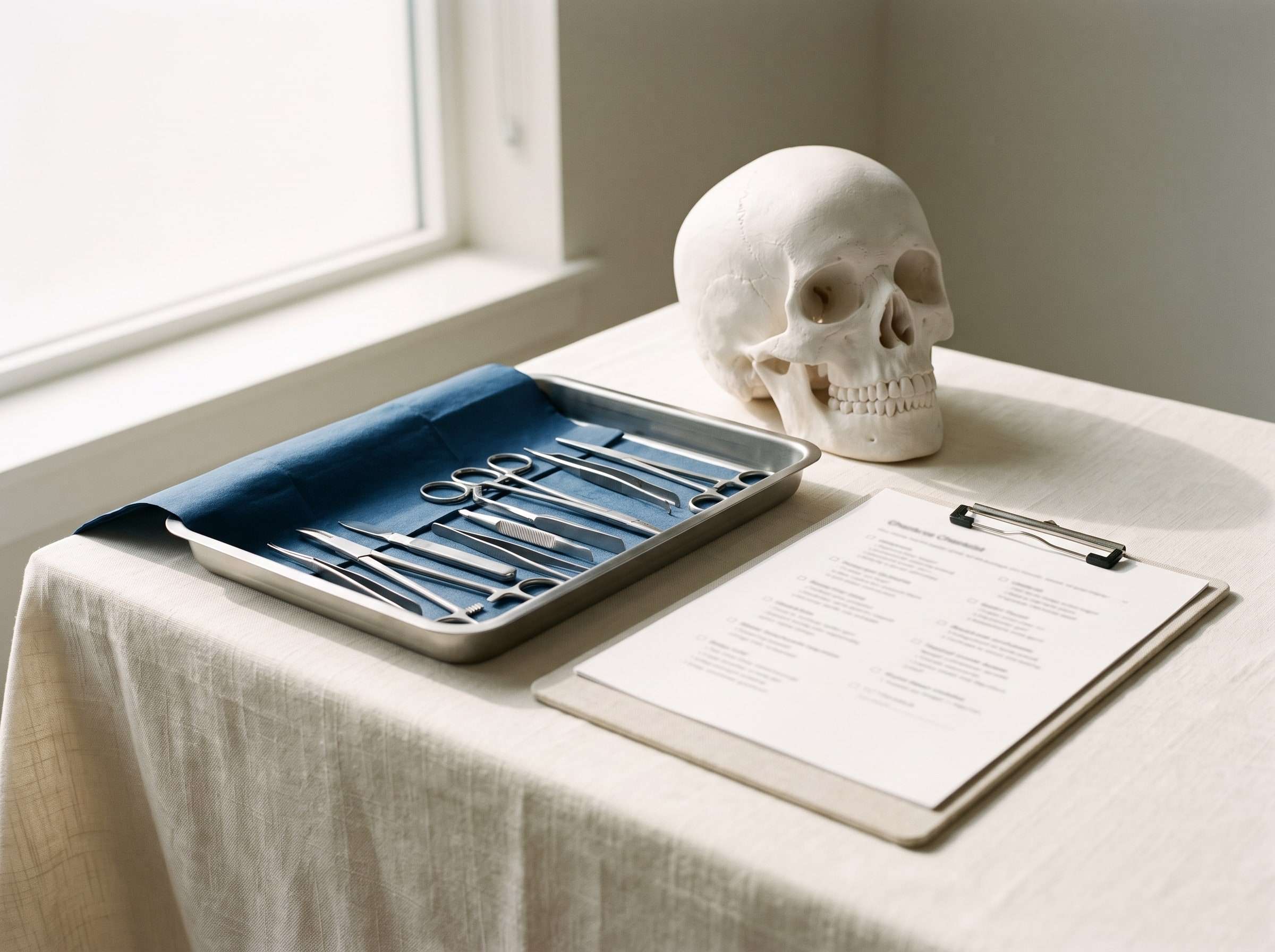
Advanced & specialized programs
Programs that build on the core: simulation and assessment, consultation and practice, and clinical imaging.
Clinical Simulation, Procedural Skills & Assessment
How procedural skills are learned, rehearsed and assessedPlannedAesthetic Consultation, Ethics & Practice Development
Communication, consent, ethical conduct and the organization of a practicePlannedClinical Imaging & Ultrasound in Aesthetic Medicine
Ultrasound anatomy, image-assisted planning and patient safetyPlanned
Research & educational development
A line of inquiry into the biology of healing and scarring. It studies the science behind the programs and is not taught.