Program 03 · Core programIn development
Aesthetic Surgical Skills for Physicians
Aesthetic analysis, local flaps, plasties and fine technique
From aesthetic analysis to the final stitch.
- For
- Physicians and physicians in training
- Curriculum
- 5 modules · 18 topics
- Format
- To be announced
- Academic direction
- Dr. S. Nouri Rafiee
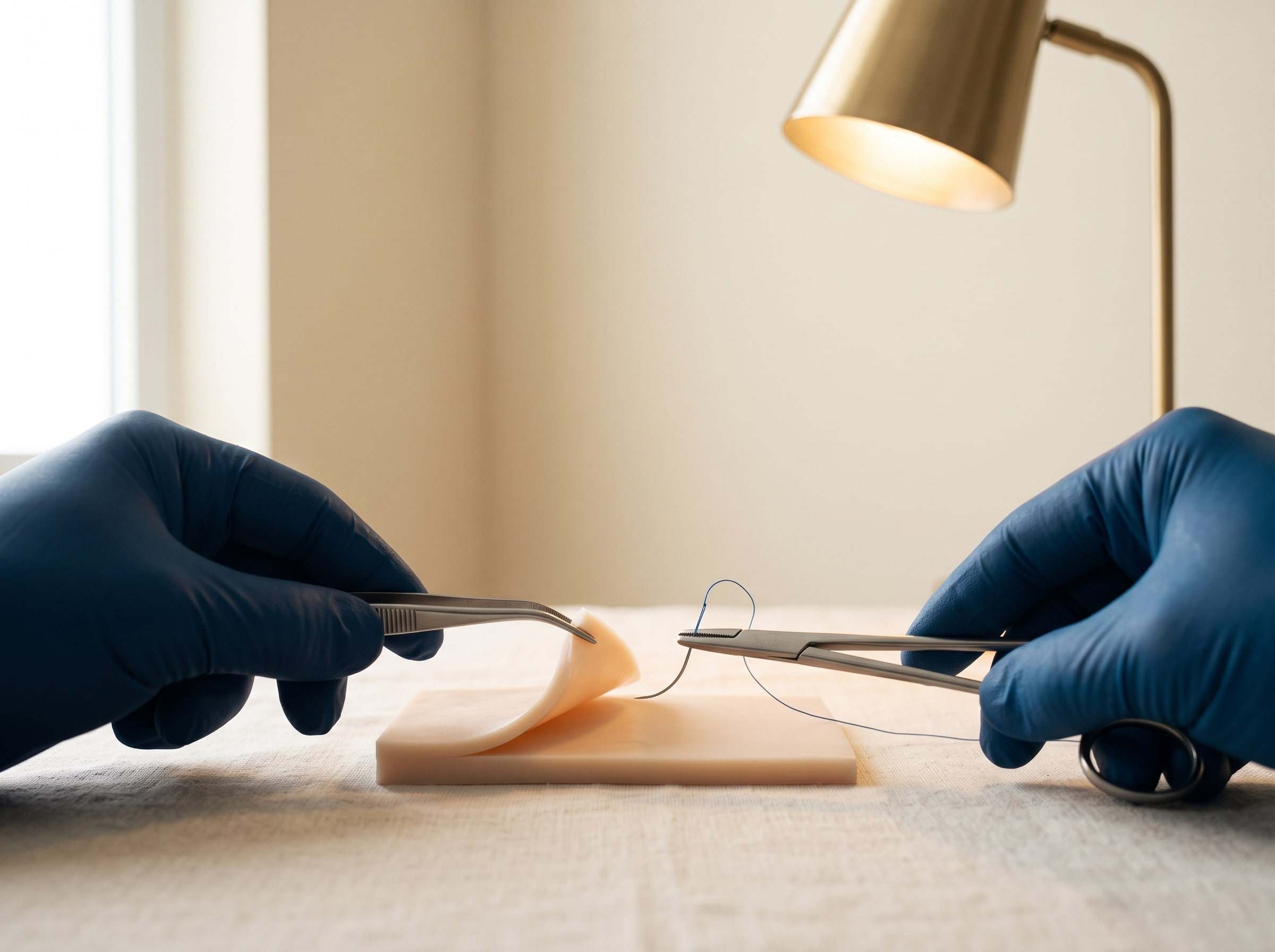
StatusIn development. The program is built on the Rafiee Educational Approach, whose framework has been developed; its format, dates and venue have not yet been announced.
Why aesthetic technique needs its own program
A scar is the part of a procedure that the patient keeps. Where it lies, which way it runs and how visible it becomes depend on decisions that are largely technical: how the face or body was analyzed, where the incision was placed, which flap or plasty was chosen for the defect and how the tissue was treated during closure.
Outside plastic surgery, these skills are often picked up in fragments, by observation rather than by design. Aesthetic Surgical Skills for Physicians is designed to teach them as a structured sequence, following the Rafiee Educational Approach: assess the patient and the site, plan the incision and the future scar, handle the tissue with care, close with intent and protect the result. At every step it also teaches the decision not to intervene, and the point at which a case belongs with a plastic surgeon.
From analysis to the final stitch
The five modules follow the order of a real case. The first covers applied aesthetic anatomy and facial and body analysis, with the Frankfurt plane as a reference, so that every technique starts from an aesthetic diagnosis rather than from the defect alone. The second turns that diagnosis into a plan: cosmetic planning, microincisions and topographic camouflage, which places a scar where the anatomy already draws a line.
The third module is dedicated to fine technique: tissue handling, soft-tissue microsurgery, a basic cosmetic closure and the minimally invasive evacuation of a hematoma that threatens a result. These are the hand skills that the last two modules rely on. Local flaps follow (V-Y and A-T advancement, rotation flaps and the rhomboid flap), each taught with its geometry, its limits and the defects it does not suit. The program ends with M-, W- and Z-plasty, used to limit the length of an excision, to change the direction of a scar or to break up a straight line that catches the eye.
How it is taught
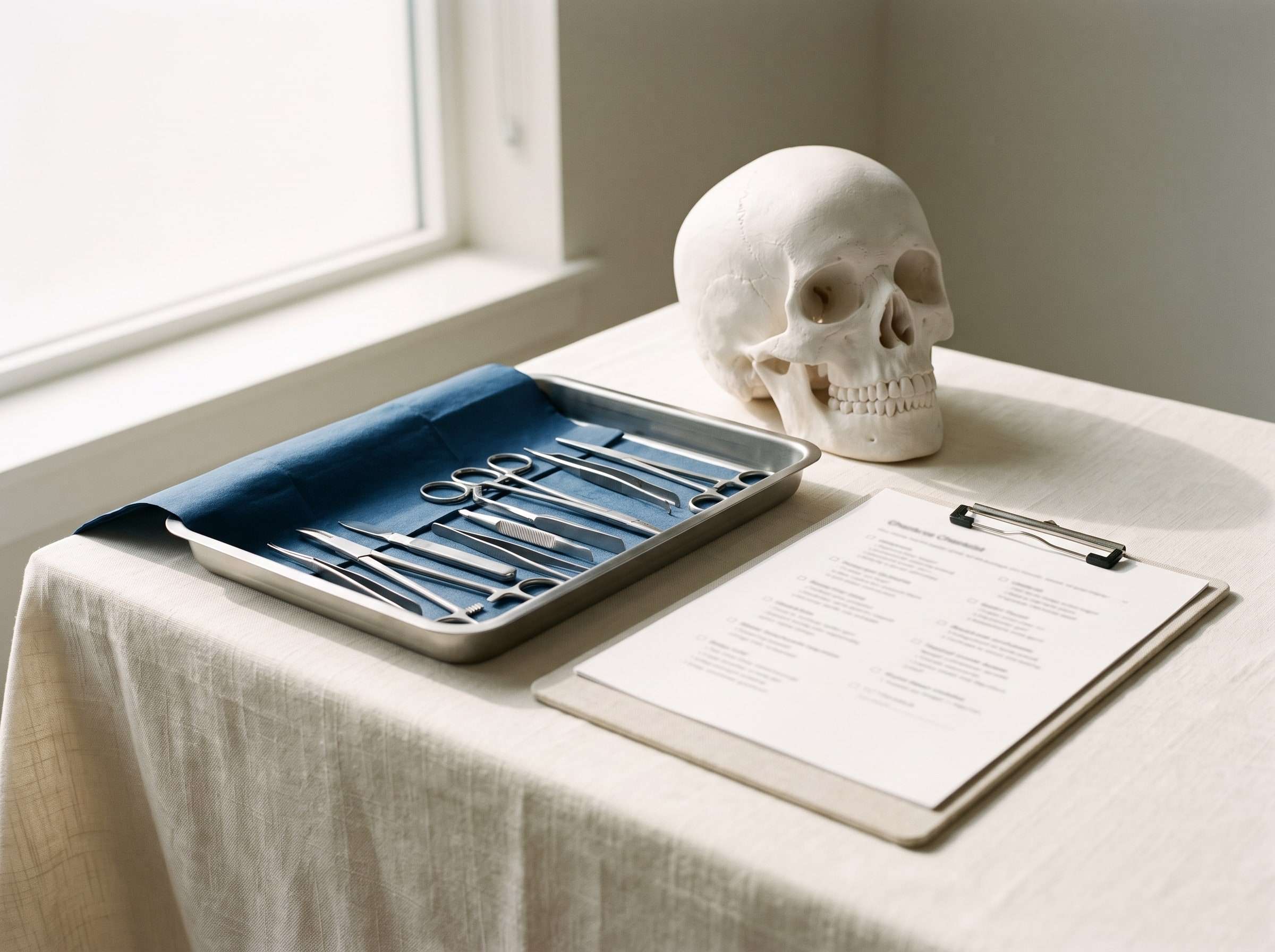
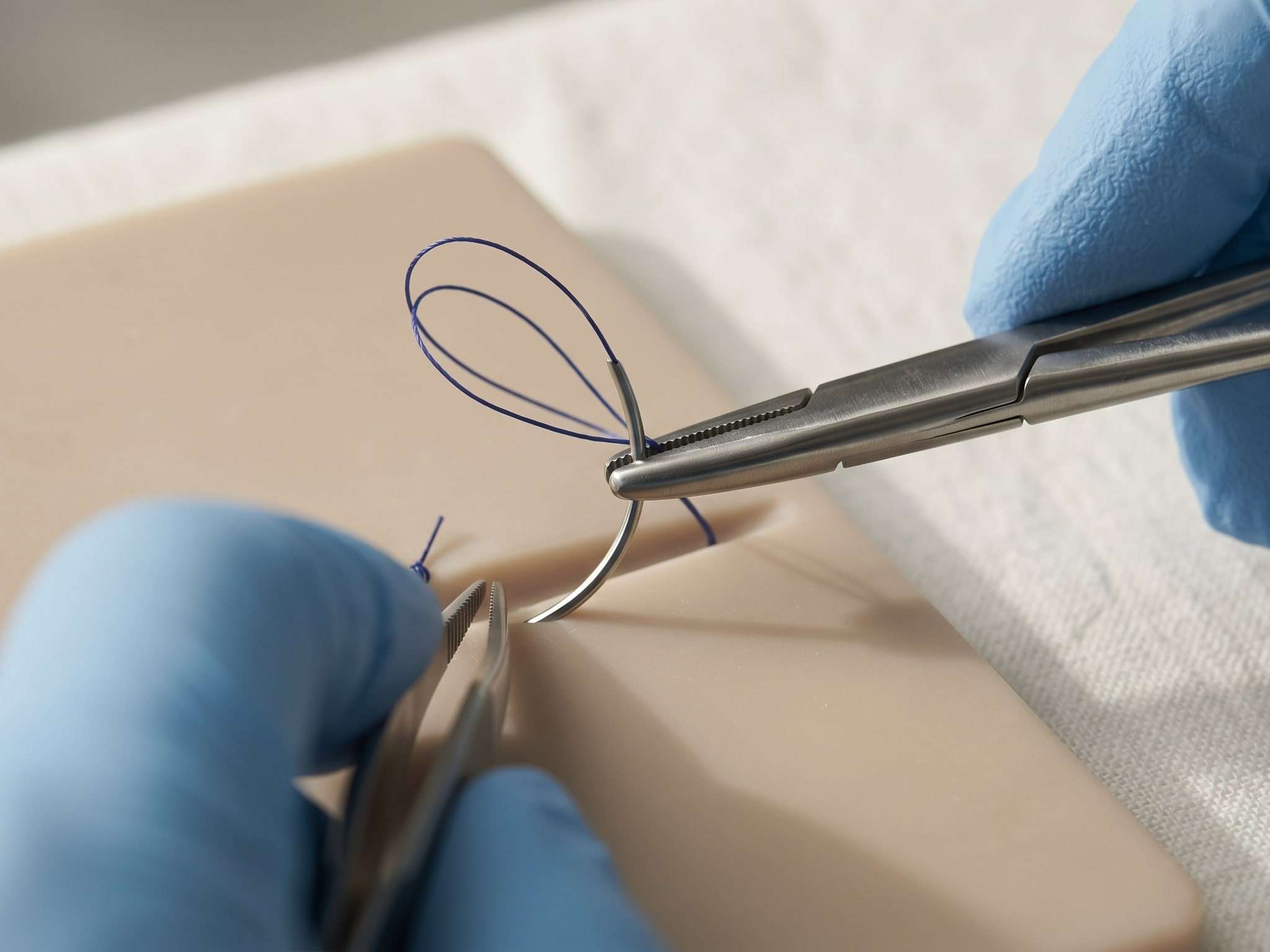
Each technique is designed to be demonstrated in full, broken into its steps and rehearsed on simulation models, with specific feedback, before any supervised practice. The sequence follows the Academy’s teaching progression. Case discussion trains what a model cannot: choosing the technique that suits a given patient, site and defect, and recognizing when none of them is appropriate.
Learning will be assessed by direct observation of technique and by structured review of planning decisions, as described in the assessment framework, which is itself in development. How procedural skills are learned and assessed across the curriculum is the subject of a planned program, Clinical Simulation, Procedural Skills & Assessment.
Where it sits in the curriculum
This is the third core program and the most technically advanced of the four. It builds on fundamentals taught elsewhere. Basic sutures and knots belong to Foundations of Clinical & Minimally Invasive Procedural Medicine, the recommended starting point for physicians without procedural experience. Wound management and aesthetic closure belong to Wound-to-Scar™, the foundation of wound closure on which this program rests. Where Wound-to-Scar follows a wound from assessment to the mature scar, this program concentrates on advanced aesthetic surgical technique.
Patient selection, consent and the early recognition of complications are developed in Clinical Aesthetic Practice & Patient Safety, a natural companion to this program.
Current status
The program is in development. It is built on the Rafiee Educational Approach, whose framework has been developed. Format, dates and venue have not been announced and will be published on this page.
Every incision leaves a scar. Where it lies, which way it runs and how it is closed are decisions made before the first cut.
Who it is for
- Physicians who already close wounds with confidence and want to plan and perform closures that protect the aesthetic result, including local flaps within their scope of practice.
- Physicians in aesthetic practice who need a surgical grounding in aesthetic anatomy, analysis, incision planning and fine technique.
- Residents and physicians in training in specialties where skin surgery is part of routine work.
Intended outcomes
The program is designed so that participants will be able to:
- Use applied aesthetic anatomy and a structured facial and body analysis, with the Frankfurt plane as a reference, to reach an aesthetic diagnosis before planning any incision.
- Plan incisions and microincisions that use topographic camouflage, so that the scar falls where the anatomy allows it to be hidden.
- Handle tissue atraumatically and perform a basic cosmetic closure with fine technique.
- Describe the geometry of V-Y and A-T advancement, rotation and rhomboid flaps, and design them on simulation models for a given defect.
- Choose between M-, W- and Z-plasty to limit the length of an excision, change the direction of a scar or break up a straight line.
- Distinguish a hematoma suitable for minimally invasive evacuation within their competence from one that must be escalated.
- Recognize the defects, sites and complications that belong with a plastic surgeon, and refer.
Curriculum outline
What the program is designed to cover. The detailed syllabus, format and dates will be published on this page with the first edition.
Where it sits in the Rafiee Educational Approach
- Module 01
Applied aesthetic anatomy and analysis
The anatomical and aesthetic reading of the face and body that comes before any technique, so that each decision starts from a diagnosis rather than from the defect alone.
- Applied aesthetic anatomy
- Facial and body analysis
- The Frankfurt plane as a reference for analysis
- Aesthetic diagnosis
- Module 02
Planning the cosmetic incision
Turning the aesthetic diagnosis into a plan: where an incision should lie, how small it can be and how its scar can follow lines that the anatomy already draws.
- Cosmetic planning
- Microincisions
- Topographic camouflage along natural folds and the borders of aesthetic units
- Module 03
Fine technique and cosmetic closure
The hand skills that the later modules depend on, together with the minimally invasive evacuation of a hematoma that threatens a result, taught within each participant's scope and competence.
- Tissue handling
- Soft-tissue microsurgery
- Basic cosmetic closure
- Minimally invasive hematoma evacuation
- Module 04
Local flaps and advancement
The geometry of the most common local flaps: how each one moves tissue, which defects it suits, which it does not, and when a defect belongs with a plastic surgeon.
- V-Y advancement
- A-T advancement
- Rotation flaps
- Rhomboid flap
- Module 05
Plasties for scar orientation and revision
M-, W- and Z-plasty as tools to limit the length of an excision, change the direction of a scar or break up a straight line, both in primary closure and in revision.
- M-plasty
- W-plasty
- Z-plasty
How it is taught
Format, dates and venue to be announced. The program is designed around demonstration and deliberate practice on simulation models, with case discussion for analysis and planning, feedback and structured assessment, followed by supervised practice where regulation and supervision allow.
The teaching progression- 1Foundational knowledge
- 2Demonstration
- 3Simulation
- 4Supervised practice
- 5Case-based learning
- 6Feedback
- 7Assessment
- 8Continued development
Scope and boundaries
What the program does not do matters as much as what it does. These limits are part of the teaching.
- The program does not authorize participants to perform procedures outside their legal scope of practice, which is defined by each country, or beyond their individual competence.
- Local flaps, M-, W- and Z-plasty, soft-tissue microsurgery and minimally invasive hematoma evacuation are taught within each participant's scope of practice and competence, on simulation models first. Supervised practice depends on local regulation and on supervision being available.
- Some indications belong to a plastic surgeon, and the program says so plainly: large or complex defects, reconstruction of the free margins of the eyelid, lip, nostril or ear, and scar contractures that limit movement or function. They are taught as recognition and referral.
- Injuries to deeper structures, such as nerves, tendons, vessels or ducts, are taught as recognition and referral, not as repairs to perform independently. An expanding hematoma, or one that threatens the airway or vision, is taught as an emergency to escalate.
- The program is not currently accredited for CPD or CME credit.
Questions about Aesthetic Surgical Skills
How does this program relate to Wound-to-Scar™ and to Program 02?
The three are designed as steps. Foundations of Clinical & Minimally Invasive Procedural Medicine (Program 02) teaches basic sutures and knots as fundamentals. Wound-to-Scar teaches wound management and aesthetic closure, from the first assessment to follow-up. This program builds on both with advanced aesthetic surgical technique: aesthetic analysis, incision planning, local flaps and plasties.
Do I need procedural experience before starting?
Yes. The program is designed for physicians who already handle instruments and close simple wounds. Physicians without procedural experience are advised to begin with Program 02, and ideally Wound-to-Scar, before this one.
Will the program qualify me to perform local flaps?
No program on this site authorizes a procedure. Local flaps are designed to be taught through their geometry, on simulation models and under supervision where regulation allows, and to be used only within each participant's scope of practice and competence. Large or complex defects and the free margins of the eyelid, lip, nostril or ear belong with a plastic surgeon and are taught as recognition and referral.
Why does a surgical program begin with anatomy and analysis?
Because much of the aesthetic result is decided before the incision. Applied aesthetic anatomy, facial and body analysis with the Frankfurt plane as a reference, and a clear aesthetic diagnosis determine where a scar can be hidden, which way it should run and which technique suits the defect.
Does the program carry CPD or CME credit?
No. This program is not currently accredited for CPD or CME credit. Any accreditation will be stated on this page only once it has been granted.
All programs
Core programs
The foundation of the curriculum: wound management, procedural basics, aesthetic surgical skills and safe clinical practice.
Wound-to-Scar™
Structured Surgical Wound Management & Scar OptimizationFlagship · In developmentFoundations of Clinical & Minimally Invasive Procedural Medicine
Fundamental clinical and procedural skillsIn developmentAesthetic Surgical Skills for Physicians
Aesthetic analysis, local flaps, plasties and fine techniqueIn developmentClinical Aesthetic Practice & Patient Safety
Safe clinical practice and decision-making in aesthetic medicineIn development
Advanced & specialized programs
Programs that build on the core: simulation and assessment, consultation and practice, and clinical imaging.
Clinical Simulation, Procedural Skills & Assessment
How procedural skills are learned, rehearsed and assessedPlannedAesthetic Consultation, Ethics & Practice Development
Communication, consent, ethical conduct and the organization of a practicePlannedClinical Imaging & Ultrasound in Aesthetic Medicine
Ultrasound anatomy, image-assisted planning and patient safetyPlanned
Research & educational development
A line of inquiry into the biology of healing and scarring. It studies the science behind the programs and is not taught.