



Knowledge
Understanding of wound biology, anatomy and the principles behind each clinical choice.
International Academy of Surgical & Aesthetic Medical Education

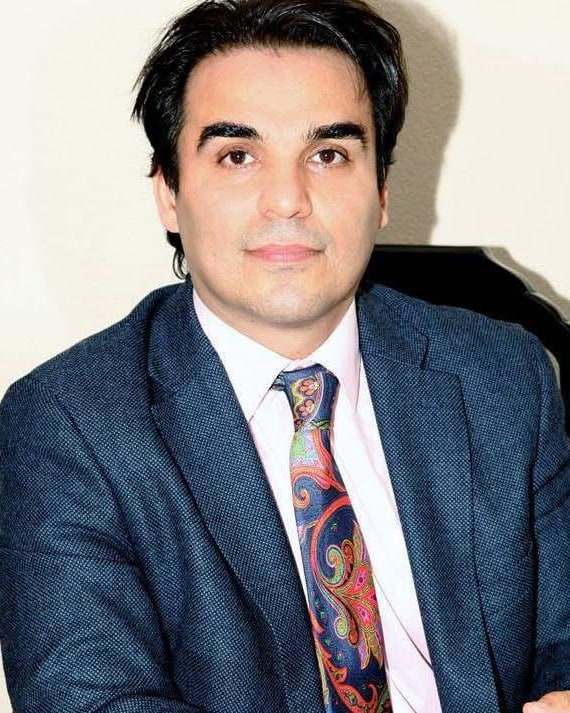
Physician, Medical Educator, Founder & Academic Director
A physician and medical educator, with postgraduate training in plastic surgery in Argentina and more than twenty years of clinical experience in Argentina and Spain.
Plastic surgery is the specialty in which the scar is part of the result. Rafiee Academy seeks to bring that perspective to every clinician who closes a wound: the decisions made in the first minutes, about whether, when and how to close, shape what the patient lives with for years.
The Academy grew out of that clinical experience and out of an observation that returns again and again in clinical practice: knowing how to close a wound is not the same as knowing whether it should be closed. It exists to teach that whole judgment, not only the technique at its center.
I teach physicians to think about the final scar from the moment they encounter the wound.
To contribute to the development of a generation of healthcare professionals who combine sound clinical judgment, practical competence, technical precision and aesthetic sensitivity in the management of patients.
Five educational pillars
Medical education provides a strong foundation in scientific knowledge and clinical principles. The transition from that knowledge to practical procedural competence, however, can vary considerably across training environments.
Wound assessment, tissue handling, closure technique, scar optimization, clinical judgment and appropriate referral may not always be taught as one structured, continuous process. A physician may know how to close a wound, yet still face a more complex set of questions.

The questions behind every closure
What should be done first?
Taught inAssess
How should the tissues be handled?
Taught inHandle
Should the wound be closed at all?
Taught inPlan
What approach best protects function and future healing?
Taught inClose · Protect
When should intervention stop, and when should a specialist be involved?
Taught inFollow-up · Referral
The Rafiee Wound-to-Scar™ Approach was developed to address this gap. It brings clinical assessment, practical skills, patient safety and aesthetic awareness into one structured approach that considers the potential scar from the earliest stage of wound management.
From treating the wound to understanding the journey from wound to scar.
Read about the educational gapThe Rafiee Educational Approach
Health professionals should learn when to perform it, why, how to perform it safely, how to evaluate the result, when not to intervene and when a specialist should be involved. The approach expresses that principle as six phases of one continuous clinical judgment.
Where procedural teaching usually stops
How to perform a procedure
What the approach teaches with the same weight
What is in front of me, and what does it need?
A structured clinical assessment of the patient and the wound before any decision is made: mechanism, location, contamination, tissue viability, function at risk and the patient’s own context.
Should this wound be closed, and if so, how and by whom?
Deciding the objective before the technique: timing, method of closure, anesthesia, the likely scar and its orientation, and whether the case belongs with a specialist.
How should the tissues be treated?
Respectful tissue handling as a clinical skill in its own right: preparation, debridement when indicated, atraumatic technique and the preservation of what will be needed to heal well.
Which closure protects function and future healing?
Choosing and executing a closure that restores alignment without excess tension: layered repair when appropriate, edge eversion, and suture selection matched to site and purpose.
What protects the wound while it heals?
Care of the repair after the last stitch: dressing, tension management, infection awareness, patient instructions and the early measures that influence how a scar matures.
Is healing on course, and when should someone else be involved?
Reviewing healing and scar maturation over time, recognizing complications early, and knowing when intervention should stop and specialist referral should begin.
StatusFramework developed. Pilot implementation and evaluation in development.
Explore the educational approachFlagship program
Structured Surgical Wound Management & Scar Optimization
From the first assessment to the final scar.
Wound-to-Scar™ is the flagship educational program of Rafiee Academy, designed to teach physicians how to approach wounds and minor surgical injuries as a continuous clinical process, from initial assessment and tissue management to closure, protection, healing and follow-up.
The program integrates clinical judgment, wound management, surgical technique and aesthetic principles, with particular emphasis on knowing not only how to close a wound, but when to intervene, how to preserve tissue, when not to close, and when specialist referral is required.
The scar begins with the way the wound is assessed, handled and closed.
Educational statusFlagship program · In development
Explore the curriculumEducational programs
The core programs form the foundation of the curriculum. Each applies the same approach to a different field of practice, from the first procedure to safe aesthetic practice.
Teaching moves in a deliberate order, so that each skill is understood, seen and rehearsed before it is performed, and reviewed after it is.
How the Academy teaches
The anatomy, wound biology and clinical principles that every later decision depends on.
Each technique is shown in full and then broken into its steps, with the reasoning behind each one made explicit.
Practice on simulation models, where repetition and error carry no risk to patients.
Skills are performed under direct supervision, with the level of supervision matched to the learner.
Real clinical scenarios, discussed without identifiable patient data, to train judgment rather than technique alone.
Specific, timely feedback on technique and on the decisions that preceded it.
Structured assessment of what has been learned, across knowledge, skill and judgment.
Learning does not end with a course: review, reflection and return visits consolidate practice.
The Academy is developing a structured assessment framework. It will look at seven domains, and later at whether learning lasts and carries over into practice.
Understanding of wound biology, anatomy and the principles behind each clinical choice.
Tissue handling, closure technique and instrument use, observed directly.
Choosing what to do, in what order and why, when the case is not a textbook one.
Anticipating risk, preventing avoidable harm and recognizing complications early.
Including the decisions not to close, not to intervene and to refer.
How prepared learners feel, measured alongside what they can demonstrably do.
Whether learning lasts over time and carries over into clinical practice.
Assessment framework in development. These domains describe what will be assessed; no results have been collected yet.
Research
Educational framework
Completed: Developed
Pilot implementation
In progress: In development
Evaluation
In progress: In development
Publication & dissemination
Upcoming: As results become available
Research and educational publications will appear here as the project develops. Nothing is listed before it exists.
Research papers, Educational publications, Conference presentations, Abstracts, Educational resources.
PublicationsStraight answers about who the programs are for, how they are taught and what registering interest involves.
According to the scope of each program: medical students with appropriate clinical preparation, newly graduated and resident physicians, practicing physicians and specialists, general practitioners, emergency and outpatient physicians, dermatologists and aesthetic physicians, and healthcare professionals involved in wound and procedural care. Each program page states its intended audience.
The programs are designed to move from foundational knowledge and demonstration to simulation and supervised practice. Technique is to be rehearsed on simulation models before it is performed under supervision.
Format, dates and venue have not been announced yet. Registering interest is the way to hear first, and to tell the Academy which format would suit your practice.
No. The programs are not currently accredited for CPD or CME credit. Any accreditation will be stated only once it has been granted.
Nothing. There are no fees and no enrollment at this stage. Your details are used only to contact you about the programs you select, and you can ask for them to be deleted at any time.
No. It is an educational initiative for health professionals. It does not provide patient care or medical consultations through this site.

Dr. S. Nouri Rafiee
Physician | Medical Educator
Founder & Academic Director, Rafiee Academy