International Academy of Surgical & Aesthetic Medical Education
An international academy for practical, safe and aesthetically informed medical education
Rafiee Academy is an international educational initiative dedicated to advancing practical, safe, clinically responsible and aesthetically informed training for physicians and healthcare professionals.
Vision
To contribute to the development of a generation of healthcare professionals who combine sound clinical judgment, practical competence, technical precision and aesthetic sensitivity in the management of patients.
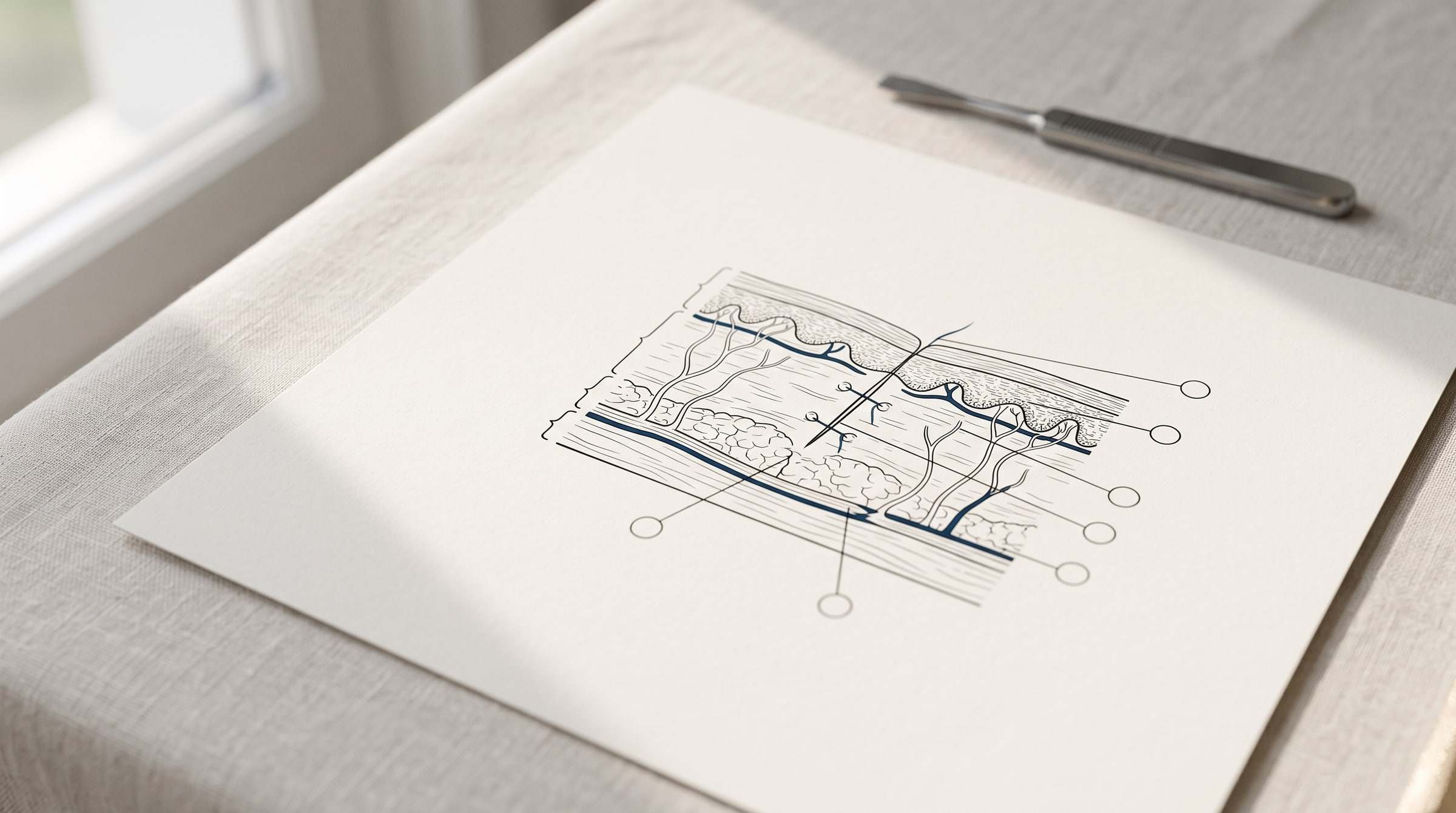
I teach physicians to think about the final scar from the moment they encounter the wound.

Founder & Academic Director
The long-term vision
The long-term vision is to develop an international educational network that promotes high-quality practical training, responsible clinical decision-making and continuous professional development across different healthcare environments.
Academic mission
The Academy's educational approach seeks to bridge the gap between theoretical medical education and the practical skills required in everyday clinical practice, minor procedures, wound management, minimally invasive interventions and aesthetic medicine.
The Academy emphasizes not only technical performance, but also clinical judgment, patient safety, aesthetic awareness, appropriate referral and the ability to recognize when intervention should be limited or avoided.
What the Academy stands on
The five educational pillars
Clinical judgment
Teaching professionals to assess clinical situations, determine appropriate intervention, recognize limitations and identify when specialist referral is required.
The educational approachPractical clinical skills
Developing structured, hands-on competencies that complement theoretical medical education and prepare professionals for common clinical situations and procedures.
Procedural foundationsWound & scar optimization
Integrating wound assessment, tissue handling, closure principles, healing and scar management, to optimize functional and aesthetic outcomes whenever clinically appropriate.
Wound-to-Scar™Minimally invasive & aesthetic practice
Teaching selected minimally invasive and aesthetic principles within appropriate clinical, ethical, professional and legal boundaries.
Aesthetic surgical skillsSafety, ethics & responsible practice
Placing patient safety, informed decision-making, complication recognition, appropriate documentation, ethical practice and responsible referral at the center of every intervention.
Patient safety
Educational approach
From knowledge to responsible practice
Healthcare professionals should learn not only how to perform a procedure, but also when to perform it, why to perform it, how to perform it safely, how to evaluate the result, and when not to intervene.
- Foundational knowledge
- Practical skills
- Clinical judgment
- Supervised application
- Case-based learning
- Assessment & continuous development
Who the programs are for
According to the scope of each program.
- Medical students with appropriate clinical preparation
- Newly graduated physicians
- Resident physicians
- Practicing physicians and specialists
- General practitioners
- Emergency and outpatient physicians
- Dermatologists and aesthetic physicians
- Healthcare professionals involved in wound and procedural care
Program eligibility and scope of practice are determined according to the specific educational program, professional qualifications and applicable regulations. See each program.
The academic contribution
From theoretical knowledge to practical, safe and aesthetically informed clinical decisions.
The Academy's long-term objective is to develop, evaluate and disseminate structured educational approaches that can contribute to health-professions education internationally, with evaluation published whatever it shows and collaboration with universities and researchers.
The Academy's particular area of educational interest is the integration of
- Clinical judgment
- Practical skills
- Patient safety
- Functional outcomes
- Aesthetic optimization
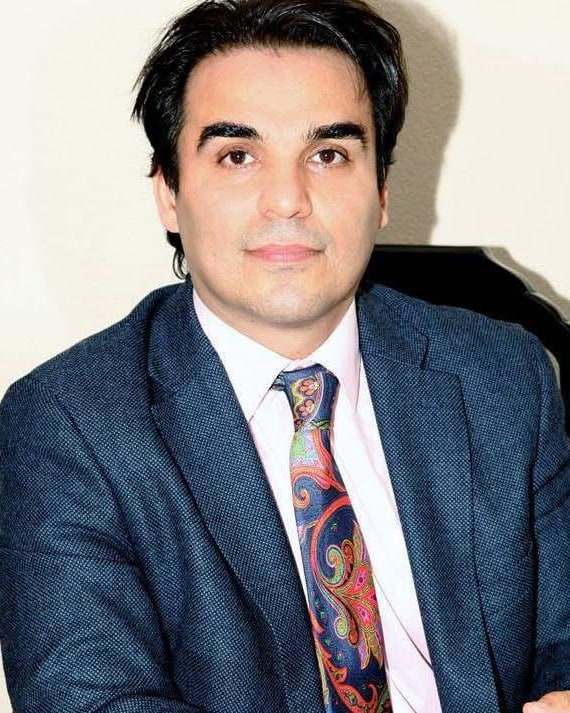
Founder & Academic Director
Dr. S. Nouri Rafiee
Physician | Medical Educator
A physician with postgraduate training in plastic, reconstructive and aesthetic surgery in Argentina, at the University of Buenos Aires, with more than two decades of clinical and surgical experience in Argentina and Spain. Dr. Rafiee's educational work focuses on practical clinical skills and on integrating surgical principles, wound management, aesthetic considerations, minimally invasive techniques, patient safety and clinical judgment.
- University of Buenos Aires
- degree in medicine and plastic surgery training
- 20+ years
- of practice in Argentina and Spain
- ICOMEM
- registered with the Colegio de Médicos de Madrid
What is Rafiee Academy, and what is it not?
Rafiee Academy is an academic initiative in health-professions education. It is not a clinic, not a course marketplace and not a medical school. Teaching is its purpose, and the study of that teaching comes with it: every program is designed to be evaluated, and every result will be published on the research page.
The Academy was founded by Dr. S. Nouri Rafiee, a physician and medical educator, out of an observation that returns again and again in clinical practice: knowing how to close a wound is not the same as knowing whether it should be closed. The educational gap that observation describes is the reason the Academy exists.
Which principles guide the Academy?
- Honesty about the stage of development. The framework has been developed; its pilot and evaluation are in development. Nothing is described as validated before it is.
- Patient safety first. Simulation before patients, supervision matched to competence, and referral treated as an outcome.
- Evidence-informed teaching. Methods that draw on the literature of procedural skills education, cited where they are used.
- Judgment over technique alone. When not to intervene is to be taught with the same care as how to intervene.
- Independence and disclosure. Educational content does not promote commercial products, and interests are declared on the disclosures page.
- Collaboration. The Academy’s questions are larger than one institution, and collaboration with universities, academic medical centers and researchers is welcome.
Who is responsible for the content?
Dr. Rafiee directs the curriculum and is responsible for the clinical content of the site. Clinical content is written or reviewed and approved by Dr. Rafiee before publication, as described in the editorial policy.
Questions
Is Rafiee Academy a clinic?
No. Rafiee Academy is an educational initiative for health professionals. It does not provide patient care or medical consultations through this site.
Who directs the Academy?
Dr. S. Nouri Rafiee, a physician with postgraduate training in plastic, reconstructive and aesthetic surgery in Argentina, with more than twenty years of clinical and surgical experience in Argentina and Spain. Any guest teachers will be named on the relevant program page once their participation is confirmed.
Who are the programs for?
Medical students with appropriate clinical preparation, newly graduated and resident physicians, practicing physicians and specialists, general practitioners, emergency and outpatient physicians, dermatologists and aesthetic physicians, and healthcare professionals involved in wound and procedural care, each according to the scope of the program and the regulations that apply.
Is the Academy's approach a validated method?
No, not yet. The educational framework has been developed; its pilot implementation and evaluation are in development, and their results will be published whatever they show. The Academy's long-term objective is to develop, evaluate and disseminate structured educational approaches, not to claim results before they exist.
Clinical expertise. Practical education. Responsible innovation.